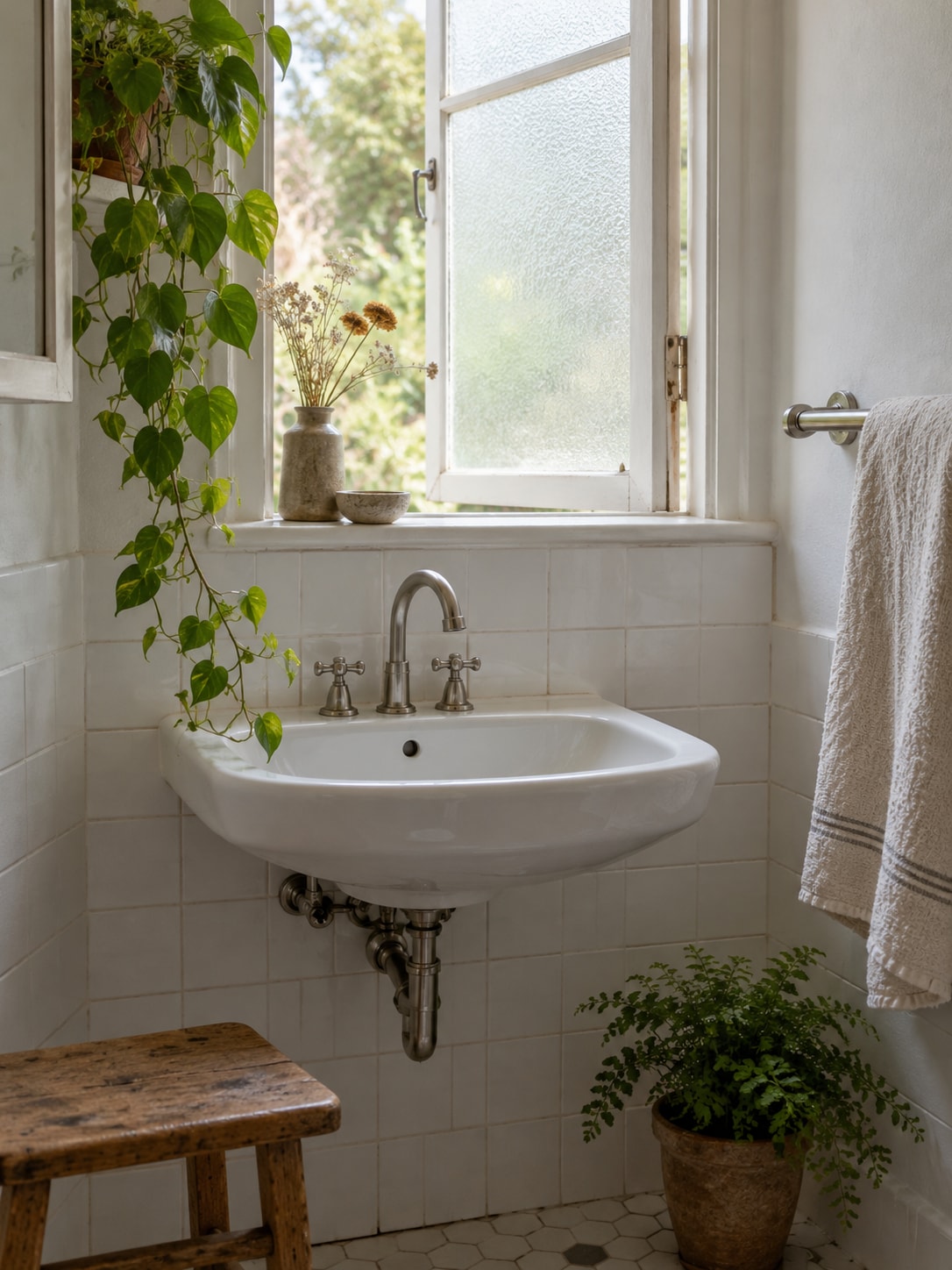
Detox the Air
This one may sound simple, but it's more powerful than most people realize.
If you live near traffic, industry, wildfire zones, or even just other homes close by, the air coming into your house may be carrying far more than you expect. And because breathing is constant, air quality affects your body all day and all night—whether you're aware of it or not.
Indoor air quality plays a huge role in sleep, focus, allergies, headaches, energy levels, and overall nervous system resilience. I've seen this step alone make a noticeable difference for people who felt chronically "off" but couldn't quite explain why. What's tricky about air is that you can't see it. If something smells "fresh" or "clean," we tend to assume it's helping—when in reality, synthetic fragrances are often adding to the problem.
Many air fresheners, plug-ins, candles, and sprays release volatile organic compounds that linger long after the scent fades. Over time, this creates a constant background load your body has to process.
Clean air doesn't announce itself. It just quietly makes everything easier.
Try This
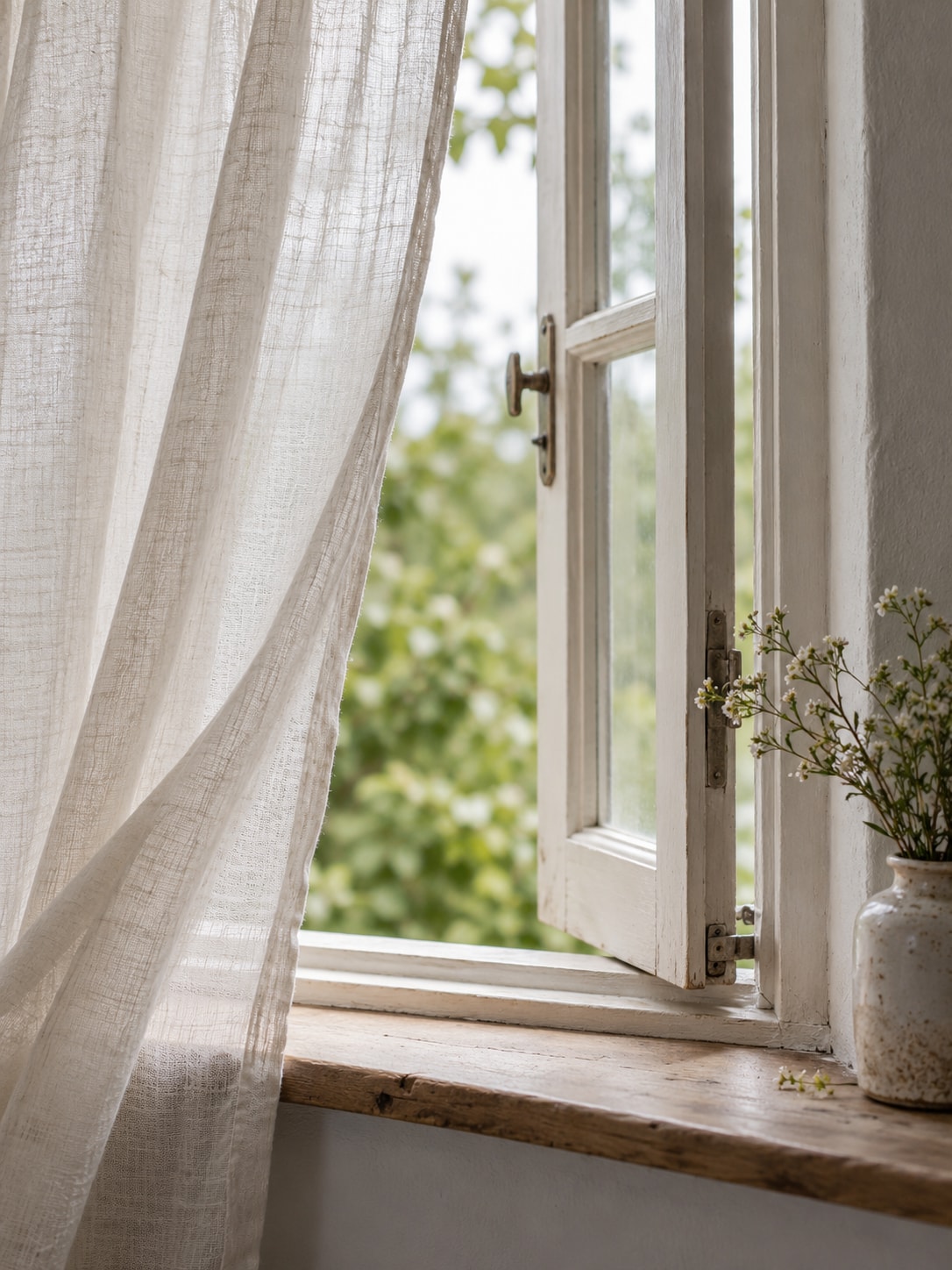
- Open windows daily, even briefly, to allow fresh air exchange
- Create cross-ventilation when possible by opening windows on opposite sides of the home
- Remove artificial air fresheners, plug-ins, and scented sprays
- Be cautious with heavily scented candles, especially those made with synthetic fragrance
- Add one or two real air-purifying plants, such as a snake plant or peace lily
- Place an air purifier in high-use areas or bedrooms, where your body spends the most time
When choosing an air purifier, look for:
- True HEPA filtration (this matters)
- A room-size rating that actually matches your space
- Low-noise operation, especially for nighttime use
- No ozone-producing features
WHY THIS MATTERS
Cleaner air quietly lowers the stress your body is carrying—often before your mind catches up. When your air is cleaner, your body doesn't have to stay on guard. Breathing becomes easier, sleep often improves, and your nervous system can take a small step out of "alert mode." That's a powerful place to start.
Detox Your Cleaning Supplies
This was one of the first things I changed—and now I know I'm using products that won't harm little lungs.
Cleaning products are one of the most underestimated sources of daily chemical exposure in the home. They're used constantly, often in enclosed spaces, and designed to linger on surfaces and in the air.
Here's the part that surprises most people: "fragrance" isn't a single ingredient. It's a legal umbrella that can hide dozens—sometimes hundreds—of undisclosed chemicals. Many of them interfere with hormone signaling, affecting energy, mood, sleep, metabolism, and fertility.
So while your home may smell "clean," it can quietly be working against you.
Try This:
- Start removing products that list "fragrance" or "parfum" without transparency
- Toss cleaners with warning labels or strong, lingering chemical smells
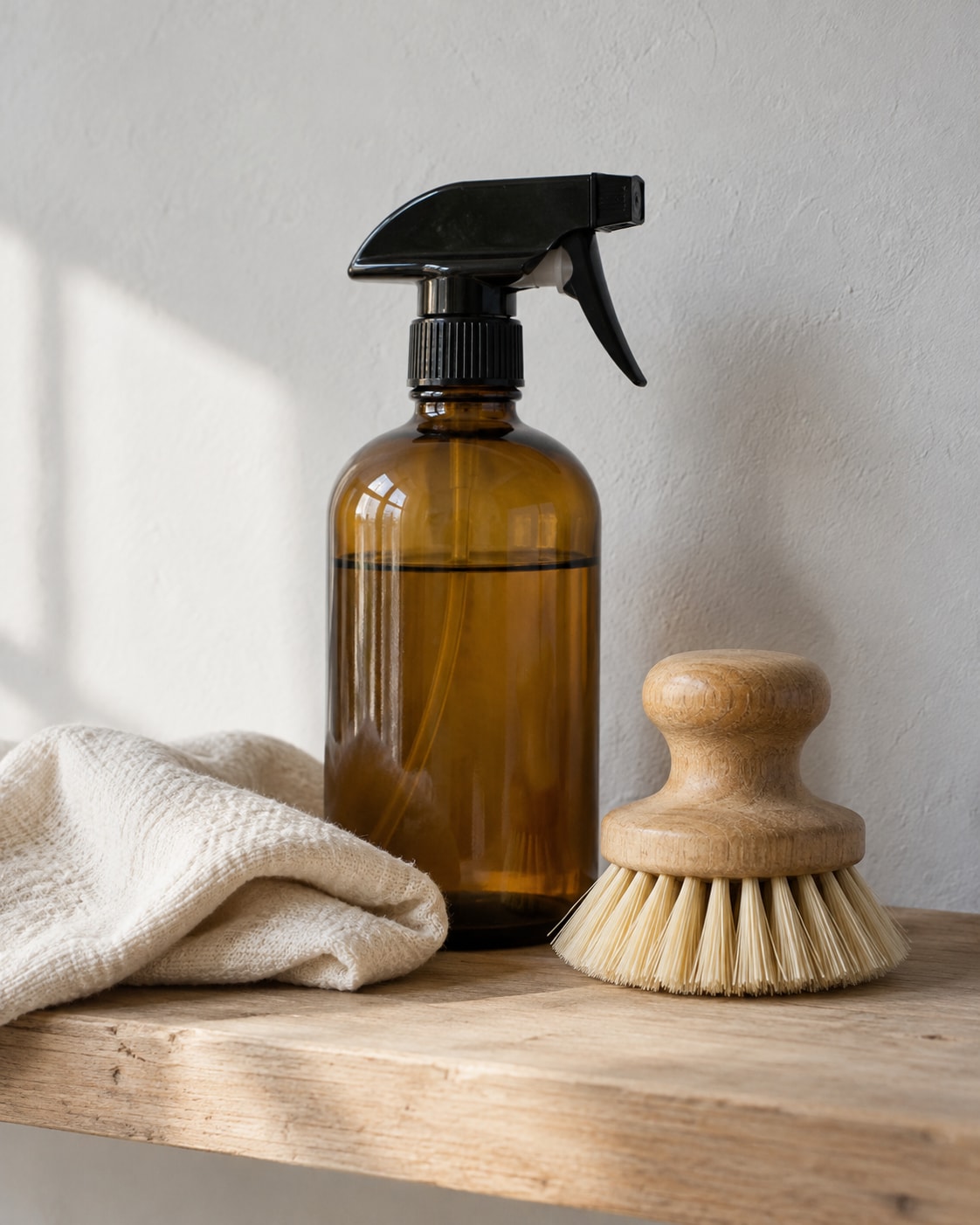
- Simplify to a small set of basics like vinegar, baking soda, and castile soap
- Use one effective all-purpose cleaner instead of several specialty products
WHY THIS MATTERS:
When constant chemical exposure is removed, your body has less to process—and that relief adds up faster than you expect.
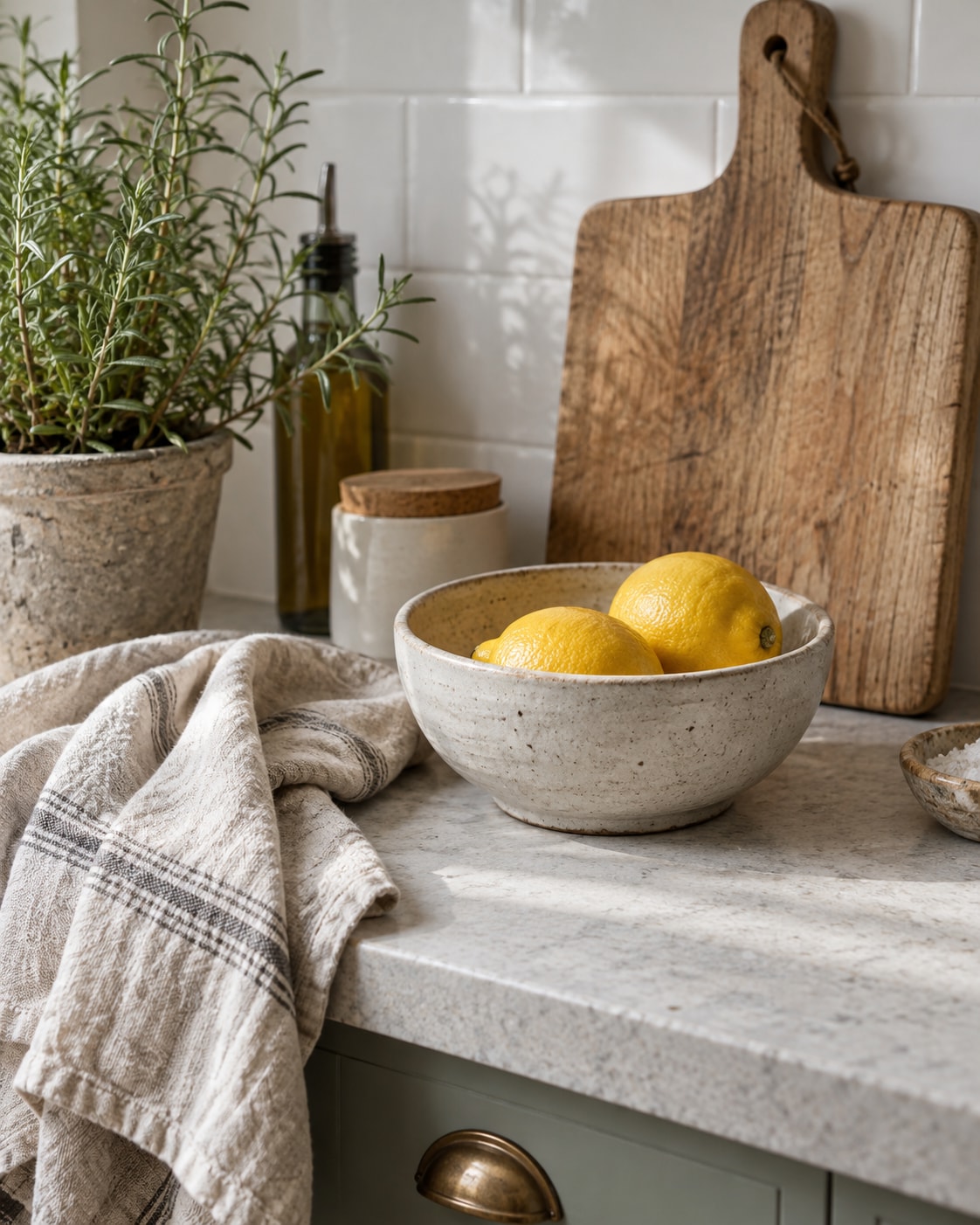
Kitchen counters feel harmless because they're part of daily life—but they're actually one of the most overloaded and contaminated surfaces in the home. Everything lands here: groceries, mail and packages, phones, bags, kids' hands, food prep.
Here's what surprised me: kitchen counters often harbor more bacteria than toilet seats. Not because they're dirtier—but because we clean toilets intentionally. Counters look clean, so they're often wiped inconsistently or around clutter.
And clutter makes it worse.
Try This:
- Clear everything off your counters except true daily-use items
- Store appliances and tools you don't use every day
- Focus less on disinfecting everything and consider a probiotic cleaner that supports a healthy home microbiome
- Wipe the entire surface at the end of the day—not just visible spots
Probiotic cleaners help maintain balance rather than creating a constant kill-and-regrow cycle.
WHY THIS MATTERS:
Clear counters reduce stress and contamination at the same time—something you feel immediately, even if you can't explain why.
Detox Your Pantry
Your pantry has more power over your health than you probably realize.
Every time you open it, you're being asked to make decisions. When it's cluttered or filled with ultra-processed foods, those decisions get harder—especially when you're tired or hungry.
A detoxed pantry doesn't rely on willpower. It relies on environment.
Try This:
- Toss anything expired, stale, or forgotten
- Start removing ultra-processed foods with long ingredient lists
- Group like items together so everything is visible (helper shelves and bins are golden here)
- Stock your pantry with real food that makes good decisions easier
If you want to take this a step further, consider slowly removing:
- Artificial food dyes
- Refined sugars
- Enriched or refined flours
- Industrial seed oils
What Changes When You Do This:
- Mindless grazing fades
- Meals become easier to plan
- Cravings calm down naturally
- Food waste drops
- Grocery spending decreases as processed foods leave the cart
WHY THIS MATTERS:
When your pantry supports you, your body doesn't have to fight so hard—and that shows up as steadier energy, calmer moods, and more peace around food.
Detox What Touches Your Food & Water
This one is a big deal—and once you see it, it's hard to unsee.
What touches your food and water becomes part of you, especially when heat is involved. Plastics and coatings don't just sit there—they migrate over time.
Try This:
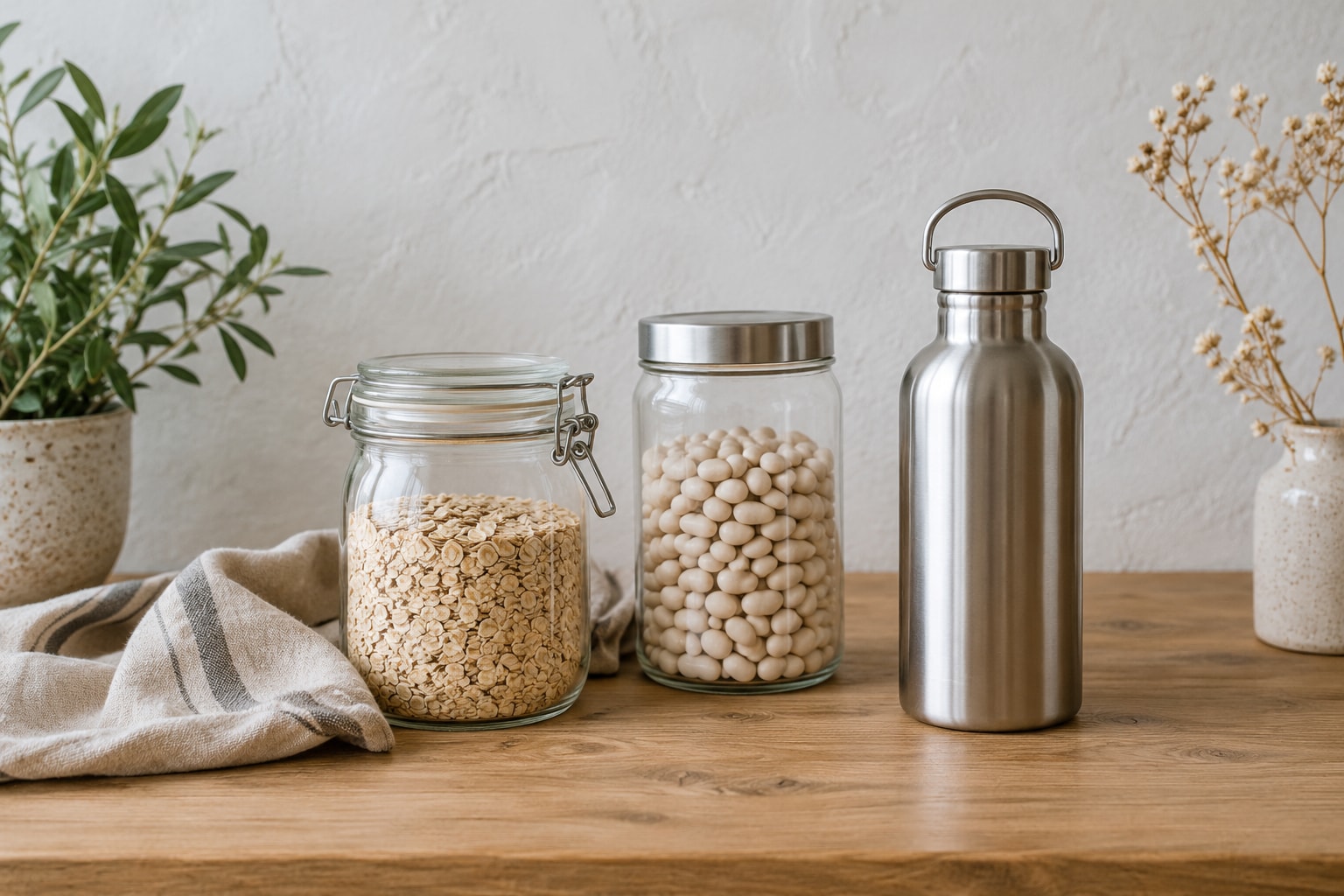
- Replace plastic food storage with glass or stainless steel
- Never heat food in plastic
- Toss scratched or cloudy plastic containers and cutting boards
- Drink water from glass or stainless steel bottles
- Choose reverse osmosis or clean spring water over tap or standard bottled water
Many refrigerator and pitcher filters improve taste but don't remove all contaminants. It's worth understanding what your system actually filters.
For cookware:
- Start phasing out scratched nonstick pans
- Choose stainless steel, cast iron, or enameled cast iron when possible
WHY THIS MATTERS:
Reducing exposure here lightens your body's load in a way you can actually feel.
Detox What Touches Your Skin
Your skin is your largest organ—and what rests against it all day and all night matters.
Synthetic fabrics like polyester are plastic. When you're warm or sweating, skin permeability increases, allowing greater absorption. The same applies during sleep.
Try This:
- Notice what you wear during workouts, sleep, and long days
- Switch to a non-toxic, scent-free laundry detergent
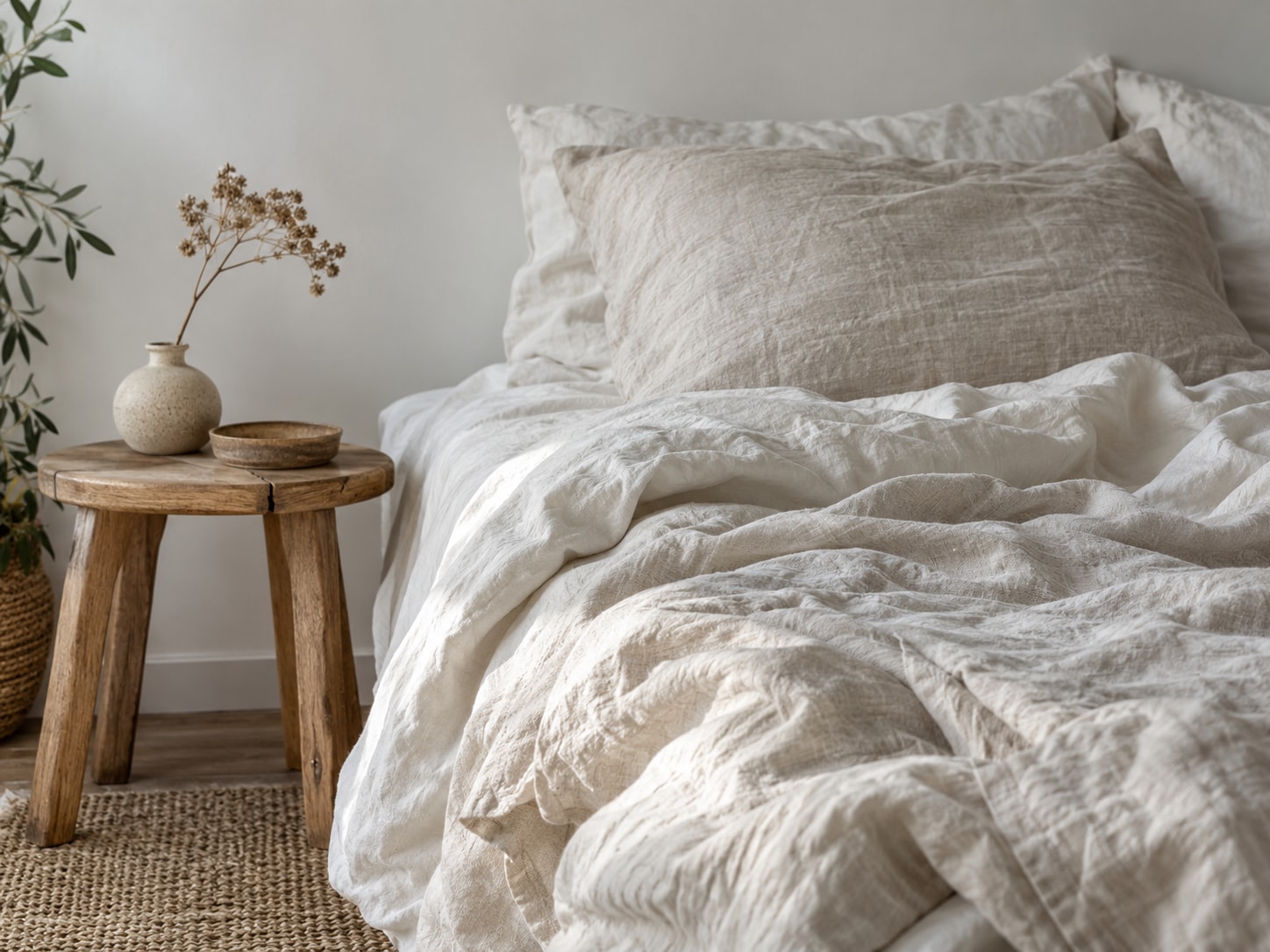
- Choose cotton or linen sheets only
- Avoid polyester or microfiber sheets, especially if you sleep warm
- Limit tight synthetic workout clothing during heavy sweating
- Start with sheets and workout clothes if this feels overwhelming
WHY THIS MATTERS:
When your skin can breathe—especially during sleep—your body recovers more easily.
Detox Your Sleep Environment
Sleep is when your body does its deepest repair.
I learned this the hard way. My bed was against high-voltage wiring near the main power panel, and night after night my body never fully rested. Moving my bed—creating even six feet of distance—dramatically reduced exposure. Electrical fields drop exponentially with distance.
Try This:
- Remove screens and chargers from the bedroom
- Keep phones off the bed and out of arm's reach
- Avoid placing beds against walls with electrical panels
- Create distance from power boxes when possible
- Use warm, low lighting in the evenings
- Keep surfaces simple and the room slightly cool
WHY THIS MATTERS:
When your bedroom clearly signals rest, your nervous system can downshift—and restorative sleep can finally happen.
Detox the Bathroom
Mold doesn't require neglect—it only needs moisture and time.
Create More Calm Than Noise
This step is less about fixing something and more about noticing what already feels good.
Once you remove physical stressors, your body begins to tell you what it prefers—quieter mornings, softer evenings, fewer things competing for your attention.
You don't need a perfectly calm house. You just need more calm than noise.
Try This:
- Let silence be an option, especially in the mornings and evenings
- Turn off background noise that's playing out of habit
- Use lighting that feels soft and supportive
- Clear surfaces that visually feel busy
- Notice which spaces help you exhale—and protect those
WHY THIS MATTERS:
When your home feels calmer, your body follows. Focus improves, sleep deepens, and your nervous system doesn't have to work so hard just to exist in the space.
Let Your Home Support the
Life You're Living
This is where everything gets easier.
A detoxed home isn't something you maintain perfectly—it's something that supports you naturally. Once your space feels lighter, your choices begin to shift without forcing them.
That's not discipline. That's alignment.
Try This:
- Before bringing something new home, ask if it will make life feel easier or heavier
- Choose quality over quantity whenever possible
- Let go of things that served a past season
- Create simple rhythms that gently reset your space
- Trust that you don't need to keep everything "just in case"
Your home doesn't need to hold your whole life. It just needs to hold you.
WHY THIS MATTERS:
When your home supports you, life feels lighter—and the calm you've created becomes something you live inside.